High Sound for Children (HSC) today convened a virtual Digital Safety Training for Girls, bringing together girls and young women aged 10–24, parents, teachers, child protection actors, and other stakeholders to strengthen awareness and practical skills for safer digital engagement.
The training provided a safe and interactive space for participants to learn about the opportunities and risks that come with being online. Discussions highlighted that as children and young people increasingly use social media, messaging platforms, and other digital spaces for learning, connection and self-expression, their safety online must receive the same attention as their safety offline. Executive Secretary Africa Child Online Safety Alliance Lilian Kariuk introduced learners to technology that allows children delete images shared for safety (take it down) but cautioned them to always think twice before posting any pictures.
Mental health and the digital world
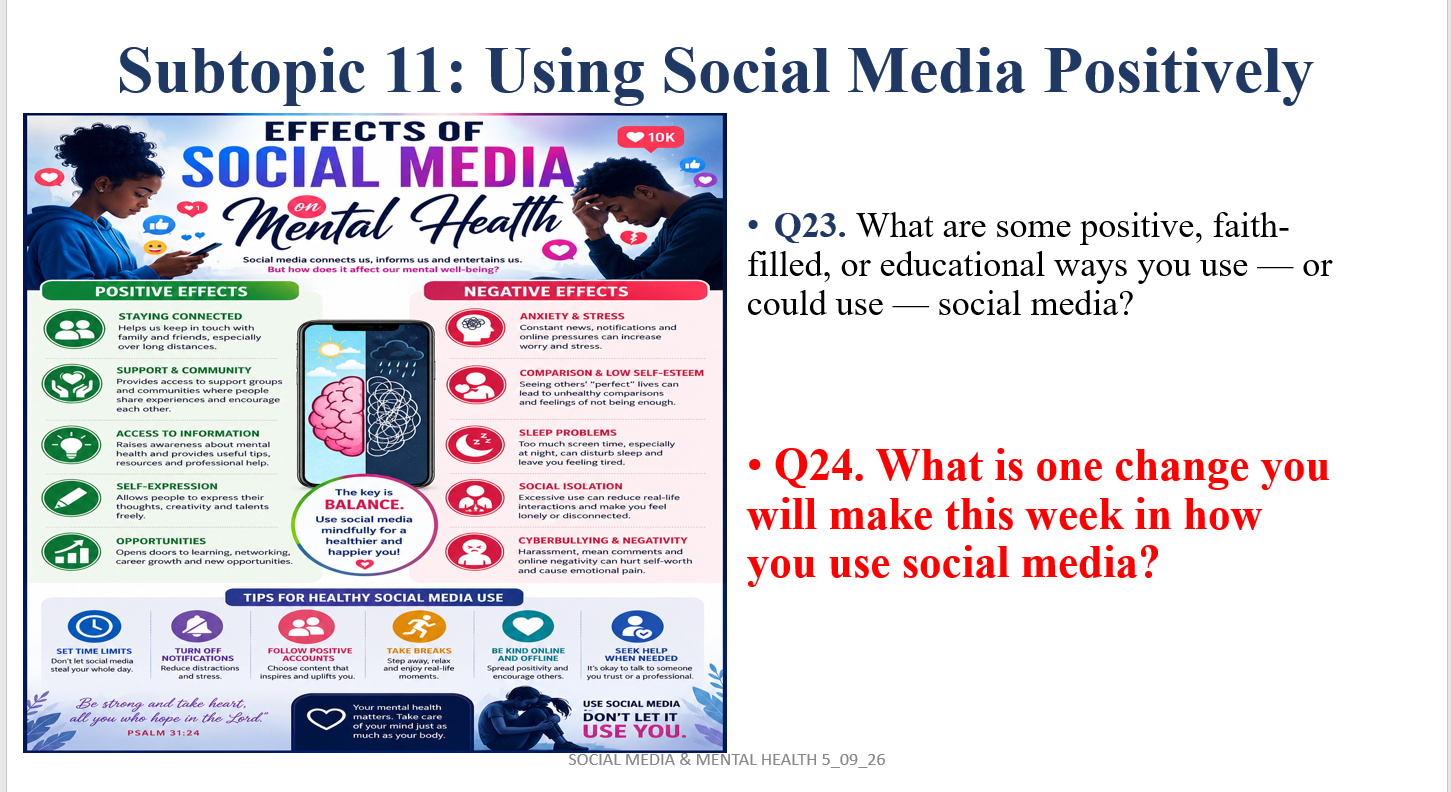
Speaking to participants, Dr. Monica Etima, a pediatrician and author of the book "Parenting this Generation" explored the relationship between mental health and social media, highlighting how online experiences can affect young people's confidence, self-esteem, relationships and emotional wellbeing.
Participants were encouraged to be intentional about the content they consume, the people they interact with online and the amount of time they spend on digital platforms. The session also emphasized the importance of seeking support when online experiences become overwhelming or harmful.
Online violence against girls across Africa
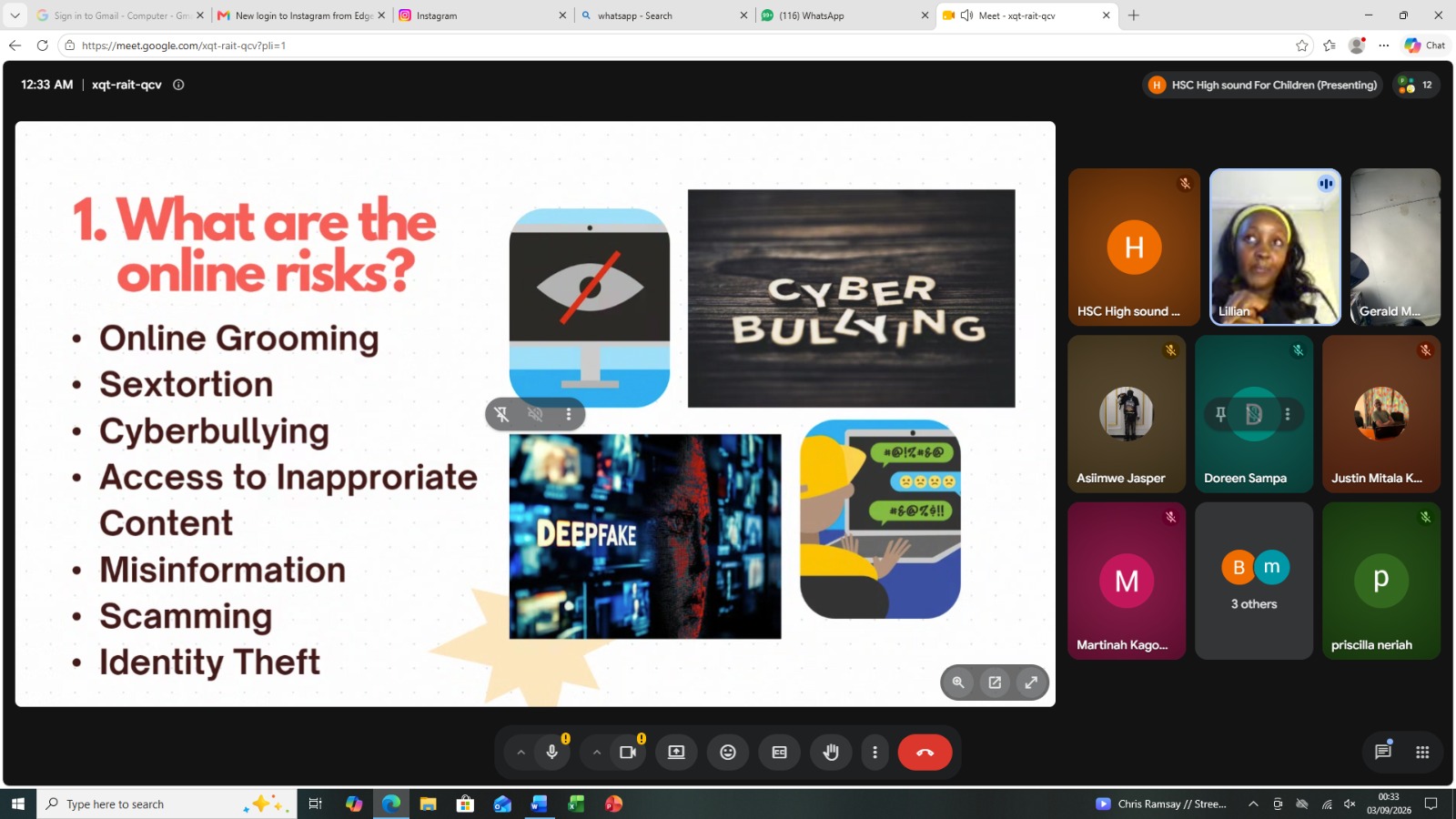
The training also examined the status of online violence against girls across Africa, drawing attention to the different forms of harm girls may encounter online, including harassment, cyberbullying, unwanted sexual communication, image-based abuse, exploitation, impersonation and other forms of digital violence.
Practical skills for staying safe online
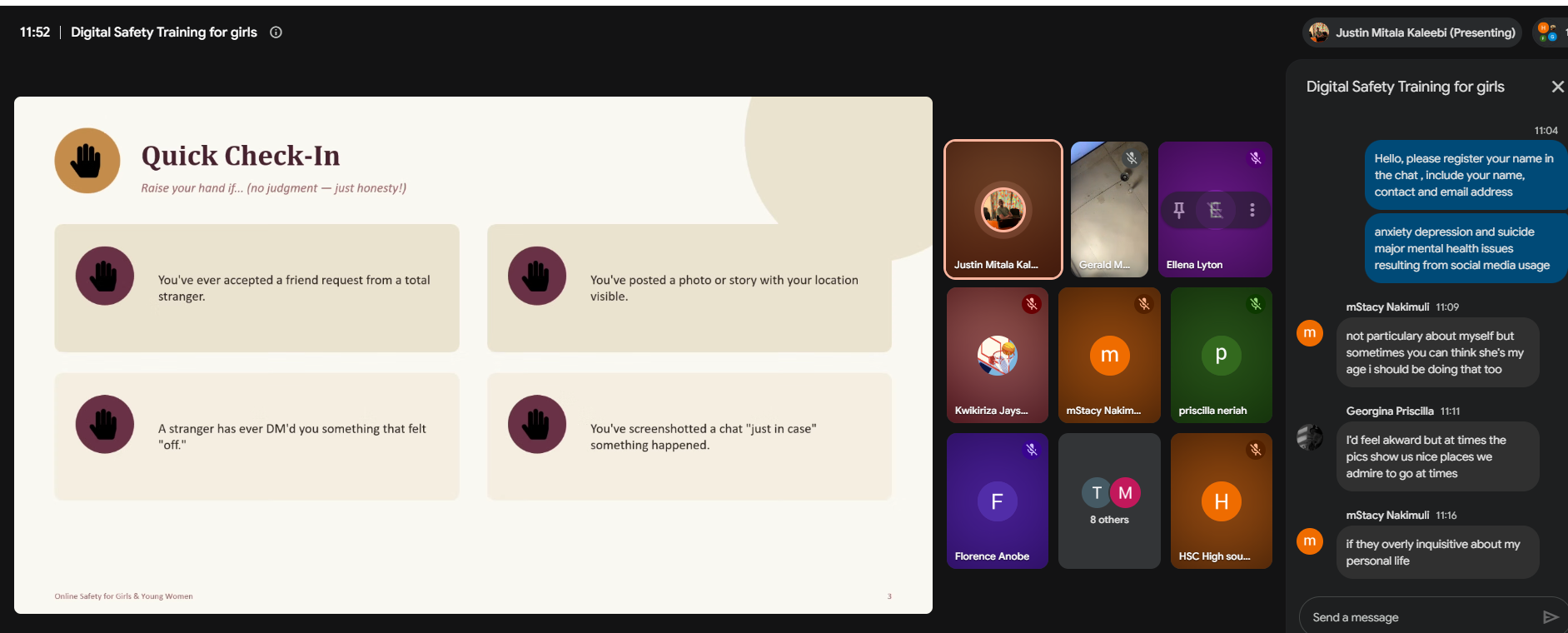
Beyond awareness, digital technologist, Justin Kaleebi took girls through practical steps they can take to protect themselves.
High Sound for Children calls on parents, teachers, schools, technology companies, government agencies, civil society organisations and young people themselves to make digital safety a shared responsibility.
Parents and caregivers must create open, non-judgmental spaces where children can talk about their online experiences without fear of punishment.
Schools and teachers should integrate digital literacy, online safety and responsible technology use into children's learning and safeguarding systems.
Technology companies must strengthen mechanisms for reporting abuse, protecting children and responding quickly to online violence.
Government and child protection actors must continue strengthening policies, reporting mechanisms and services that respond to technology-facilitated violence against children and young people.
And to girls and young people, our message is simple: your safety matters online. Your voice matters. You do not have to tolerate abuse, harassment or exploitation because it happens behind a screen. Speak up, report abuse, seek help and support one another.
“Digital safety is as important as offline safety for our children. We must equip young people not only to use technology, but to navigate the digital world safely, confidently and responsibly.”
High Sound for Children Executive Director, Hadijah Mwanje appreciated all the young people, parents, teachers, stakeholders and facilitators who participated in the training and contributed to making the conversation possible.